

Leaderboard
-
DaptoFunlandGuy
Members27Points15,638Posts -
Noll_57
Members14Points294Posts -
themagician
Members13Points8,294Posts -
New display name
Members12Points8,176Posts

.thumb.jpeg.eb47109a7befe09821c7d8c9e1565e4c.jpeg)

Popular Content
Showing content with the highest reputation since 19/09/26 in all areas
-
it's not just the hours either. I've seen two separate unrelated instances of their absolute contempt for the guest experience in recent months: An annual pass, sold with a '12 month' photo pass. T&Cs said if the annual pass wasn't activated within 3 months it would start at the end of the 3 month period. The photo pass which was included with the annual pass stated it had to be activated within 3 months or it was void. An error on the passholder's part, but it's not an unreasonable assumption that inclusions sold with an annual pass would have similar validity rules. Guest services in park and over the phone had zero interest or empathy for the situation and were not empowered by the organisation to do anything to try to salvage the guest experience when they visited for the first time after the 3 month cut off. Both In-park guest services and the call centre provided an email address (but not the SAME email address) and one email address responded pretty much 'rules are rules' and closed the ticket. The other, after over a month, eventually came to the party and provided the guest with a photo pass that would last the remainder of the annual pass validity. A family holidaying on the GC purchased 3-day tickets to Village (which requires the 3 days to be consecutive visits) and after visiting on day 1, two of the kids tested positive for Influenza-A. The mum tried reaching out to guest services to see if there was anything they could do with the tickets so that they could use them once the kids were feeling better \ not contagious and just got a flat out no. Again this came across as guest services were just not given any flexibility to try to plus the guest experience, and 'rules are rules' was the general vibe. This has only just happened so i'm not sure of the outcome of any email escalation the family may have done, but I did see this morning that Dreamworld has actually commented on the mum's social media post offering them two-day tickets to Dreamworld when the kids are feeling better. Like i'm all for the park reducing hours if it isn't profitable to operate - especially in the off season. Dreamworld as been doing this for a while and almost nobody has had a problem with it. But you have to care about the guest experience, and that's the main difference here. At this stage they're just making it so easy for Dreamworld to ride in like the white knight and save the day. Cutting back on events, removing entertainment, reducing hours and reducing the ability for guest services to... provide services to guests... - it's clear VR are slashing everything they can to save a buck. The tables have absolutely turned on the GC, and Dreamworld is fast becoming the new top dog.10 points
-
I think that's a short-sighted and narrow-minded view. The ride has always been lambasted as unsuitable. Ride experience, ridiculous dispatch times and uncomfortable and restrictive harnesses, themeing and location, none of it worked and it was a poor decision from management whom we now know should never have operated a theme park. Current leadership have shown that they are willing to go the extra mile to deliver an immersive and cohesive experience, albeit within budgetary constraints. MDMC stuck out like a sore thumb against the backdrop of their flagship Rivertown, and management made it very clear that while they couldn't fix it during the construction of Rivertown, they would move to change that as soon as they were able. The retheme will fix the issues of theme and location, the new trains will fix the harnessing issues, while simultaneously improving the ride experience - which - based on what the park has said - will also be enhanced by additional themeing elements too. While we don't yet have information on whether this will speed up operations, I feel confident that anything has to be better than those trains, so thats a plus also. Everything they've announced goes directly to fixing the inherent issues with the ride since day 1 while focussing on improving the park as a whole, bit by bit. There's very little in terms of direction and capex at Dreamworld in recent times that I could complain about. I was never really a fan of MDMC - but i'm keen to see what they can do with it - rather than shit on it before it's even started.7 points
-
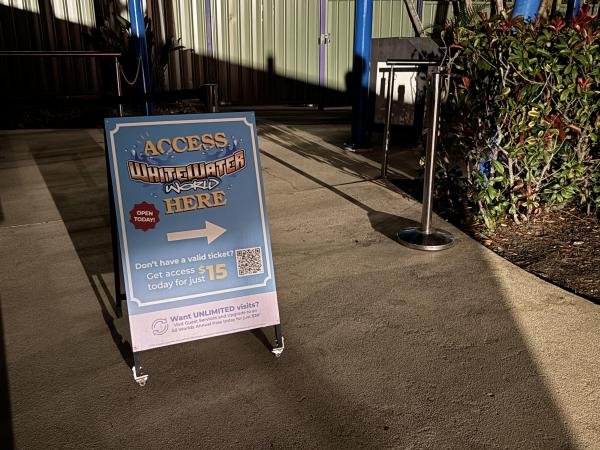
6 pointsNoticed tonight that the direct in-park link between Dreamworld and WWW has finally reopened!
 6 points
 -
4 pointsFunfields have been teasing this on their socials for a few months, but they have officially announced that their Kraken Racer is being upgraded to become Kraken Unleashed, with the slide becoming 75m longer. Making it the longest slide racer in the country. Based on the images, it appears that the only part being kept is the final hill and splashdown, with the rest of the slide being brand new and aligning with the elements most modern racers get. The slide will be 235m long, 22m tall and is opening this Summer.
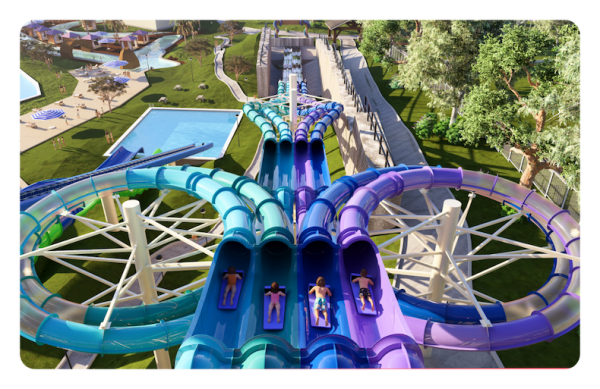
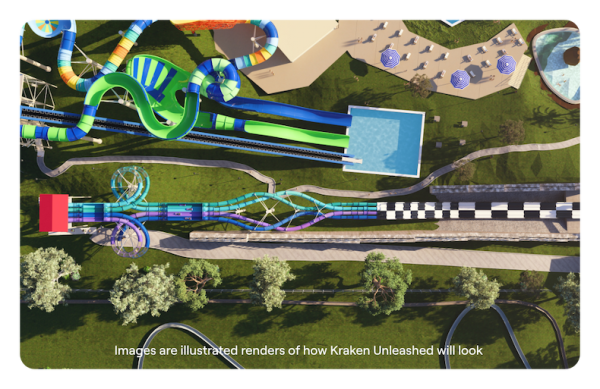 4 points
 -
If I'm being honest, I'd still rather DW lower budget and "cringer" style of marketing over VRTP's more sterile and corporate style of marketing because I believe it better appeals to the general audience being marketed to when compared to VR's marketing that's very safe and overproduced and has obviously gone through too many branches of PR and management.4 points
-
4 pointsThe key to not being disappointed with VRTP at the moment is not having any expectations4 points
-
I can’t believe how insensitive people can be posting it online.3 points
-
How have heads not rolled at Village? I believe, these shit trading hours are completely self inflicted.3 points
-
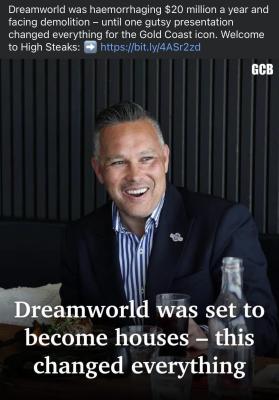
Dreamworld, the Gold Coast theme park already reeling after the tragic deaths of four visitors on a family fun ride in 2016, was on its knees. The dark shadow following the deaths of Kate Goodchild, Luke Dorsett, Roozi Araghi and Cindy Low on the Thunder River Rapids Ride loomed large for years and when visitor numbers finally started to rebound, along came Covid. Governments helped to sustain big business during those days, but even when things returned to some semblance of normality, Dreamworld was leaking money hand over fist and the natives – or in this case the board members of parent company Ardent Leisure, were getting restless. There were some who wanted to demolish the theme park and sell off its valuable land for housing estates. Fast forward to today and Dreamworld has never been stronger – record revenue, soaring visitor numbers (including a new record single-day attendance), massive investment on state-of-the-art new rides and approval for a game-changing tourist development complete with onsite resorts. The stunning turnaround had been building quietly for some time before the recent annual report delivered an emphatic exclamation mark for the park’s parent company – now known as Coast Entertainment Holdings. The success is being widely celebrated on the Gold Coast, where theme parks are not only major employers for the local economy, but also barometers for the state’s tourism industry. But none of that success would have been possible if the board had not voted to keep the faith in the face of a tempting opportunity to turn the whole place into real estate. It’s a moment Dreamworld CEO Greg Yong knows well. Meeting with The Sunday Mail for a High Steaks lunch at Coomera’s Quarterdeck restaurant overlooking the river and the bustling Gold Coast City Marina, Yong speaks candidly of that time and the presentation dubbed FOD (Future of Dreamworld) which convinced board members to keep the Dreamworld dream alive. Yong, who has a photo of the Thunder River Rapids victims on his office desk, is a Gold Coast local who climbed the ranks during two stints across nearly 15 years at cross-town rival Village Roadshow, where he was working at the time of the disaster. He joined Dreamworld in 2019 and became CEO in 2021, going to the US to study business strategy at the prestigious Harvard University. It gave him a better understanding of the business side of theme parks and an appreciation of the financial ramifications and costs and benefits of big decisions. But coming to Dreamworld in the first place had been a risk for Yong, leaving the comparative comfort of the Village Roadshow family which runs Sea World, Movie World, Wet’n’Wild and other attractions. He knew full well the pain and heartache that had been caused by the Dreamworld tragedy but wanted to be part of the solution. “I looked at it and thought this could be one of the biggest turnarounds in a theme park business ever, and probably something you’d only do once in your whole career,” he says. “And it’s so much more than just “Hey, let’s get a business turned around” … but the whole emotional side of what happened, I thought this would be a big thing to be part of.” After arriving at the park to work under former CEO John Osborne, Yong was eventually elevated to CEO after Osborne’s departure and continued to believe in reinvestment rather than the easier option of selling off the park and its surrounding real estate. “To be honest with you, the numbers said the safest option – from a business risk perspective, was to just close it,” says Yong. “But I didn’t want to take that road.” Neither did plenty of others. Gold Coast Mayor Tom Tate caught wind of whispers over plans to bulldoze the park and was dismayed, mounting his own argument for the park’s future. “His view was very strongly that Dreamworld should be hanging in,” Yong recalls. And then there was Gary Weiss, the parent company’s unconventional chairman. Often – and perhaps unfairly, described as a “corporate raider”, Weiss’s arrival at Ardent Leisure fuelled fears for the future in some quarters, but the man himself was fiercely loyal to Dreamworld, especially when the park’s future hung precariously in the balance. “Gary said” ‘I’m just not going to be part of it (plans to sell it off),” says Yong. “He said: “I’m not going to be the guy who will be remembered as the one that came in and shut down Dreamworld”. “We’ve got people that have been there for 30 years, 40 years, and so what an ordinary way to end things for them that would have been to have all that time and then suddenly Dreamworld is a housing estate. “I think that’d be a terrible thing to have happened.” But the FOD pitch won the day, a call to think long-term and actually spend even more money in an era when the park was losing $20 million a year. It wasn’t an easy sell, but ultimately it worked. “It was really, really gutsy,” says Yong. “It took some big hard decisions like closing a lot of the favourite park rides … and we said: “We can’t do that unless we’re going to put a lot of money in and really invest in the park”. “So here’s one option which looks really safe, just sell the joint, put houses on it. “It’d be really sad for all of us to lose our jobs, but it’ll be good for the shareholders … or run with this plan saying: “Hey, let’s go and spend a lot more money – it might not work but let’s give it a shot”.” Yong clearly believed in Dreamworld’s future, but admits it wasn’t with unwavering certainty. “I believed in it, but I was still shit scared for sure,” he said. “Because these investments … the thing we do, which is high risk, is make big decisions about new attractions. “Because if you get it wrong, it’s like in that case, we have a $50 million decision … and you don’t really do my job and have those kind of things go badly and keep doing my job.” The success of those decisions are now paying dividends – quite literally in this case, with Dreamworld (along with sister park WhiteWater World and Q1’s SkyPoint) contributing to a $6.1 million profit in the last financial year for Coast Entertainment Holdings after years of going backwards or treading water at best. It’s undoubtedly a career highlight for Yong, the son of a Malaysian Borneo immigrant father and Aussie-born mum, who grew up as a rugby league-mad kid on the Gold Coast in the 1980s and 90s with dreams of becoming a professional pilot. He started taking flying lessons at 15 and by 17 was able to impress his young girlfriend (and now wife of more than 25 years Tanya) by whisking her off for romantic getaways down to northern NSW in a light plane. But as the commercial realities of the time and money involved in accumulating enough flight hours to meet the standards required for airline pilots began to sink in, he pivoted and took a job at Toys R Us. As a cute and quirky piece of Gold Coast trivia, Yong often suited up as the giant Geoffrey Giraffe mascot – including on game day for Gold Coast Chargers NRL matches where he ran up and down the sidelines beside his new bride who donned the Paddle Pop Lion outfit. That experience has given him an appreciation of what mascots at theme parks go through, often sweltering in summer heat surrounded by hordes of kids. He has even been known to don the park’s famous Kenny and Belinda Koala costumes from time to time. It’s not the only way he can relate to theme park staff – even now on busy days Yong will grab an apron to flip burgers at a fast food counter or a broom to clean up any rubbish lying around. “All of our executives and managers do the same thing,” he says. “I think it’s good because when we’re super busy, we’ve got to be shown to be out there and see what goes on. “So I like doing that kind of stuff just to show that we’re actually out there having a go.” It was certainly all hands on deck during this year’s summer and Easter school holidays as Dreamworld’s car park consistently overflowed with visitors. Yong is proud to have played his part in helping shape Dreamworld’s incredible redemption story, even if the sadness of the disaster will never entirely fade away. Which he accepts. “I think the biggest thing that we’ve really thought about with that (the 2016 tragedy) is that it is never going to not be part of who we are anymore,” he says. “If you think about the Luna Park tragedy that happened back in the 70s, it still comes up today. “I think people will think about what happened at Dreamworld in 10 and 20 and 30 years to come and that’s just part of what a significant thing like that has been. “We’ve got to remember the past and we’ve got to be able to use that as a good thing to motivate what we do in terms of how we think about safety and … to make sure that we do everything we can to make sure something like that doesn’t ever happen again. “But at the same time, we’ve got to look at people that are coming now and make sure they still have an incredible experience and make really good memories.”3 points
-
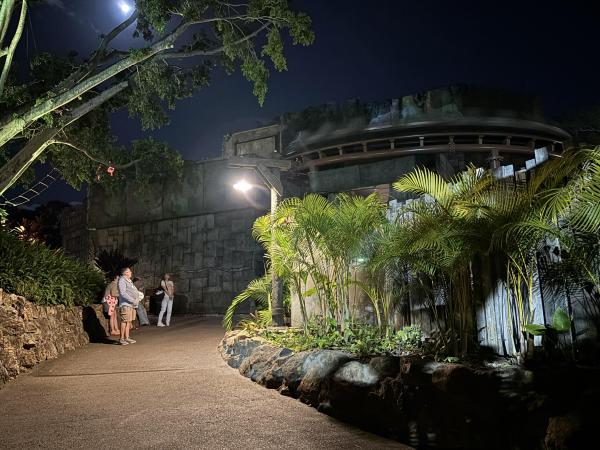
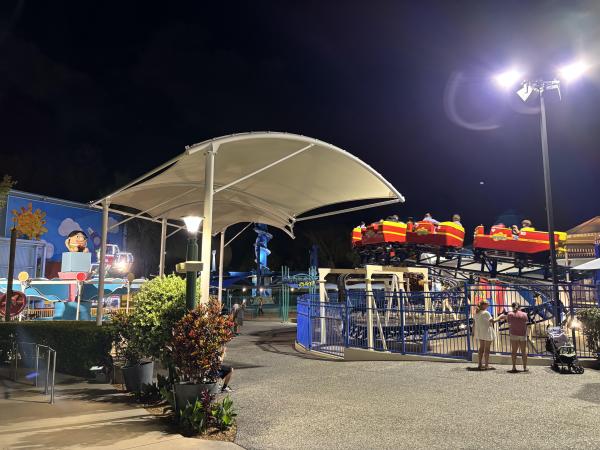
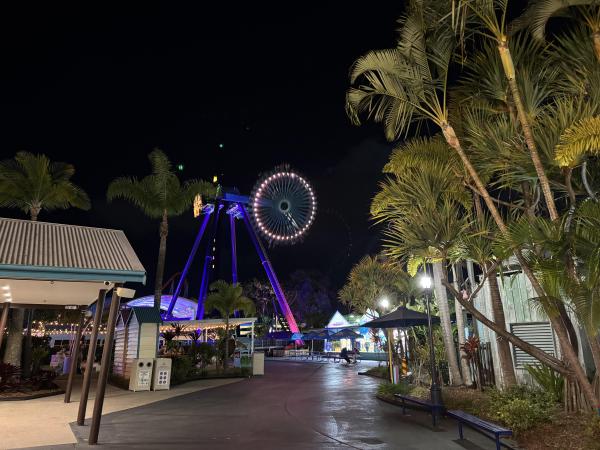
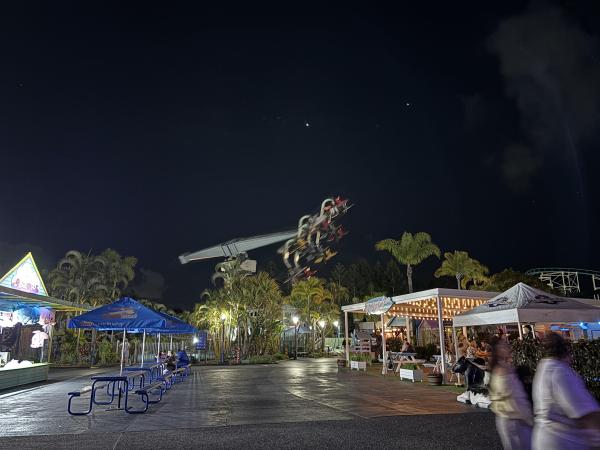
I was at Dreamworld today and had no idea this was happening, so it was a very pleasant surprise! I didn’t see any advertising about it beforehand and assumed tonight would be just another regular Night Market. But the entire park was open with all of the rides operating right up until 9pm. The place looks great at night too with all the new permanent lighting they’ve recently installed.
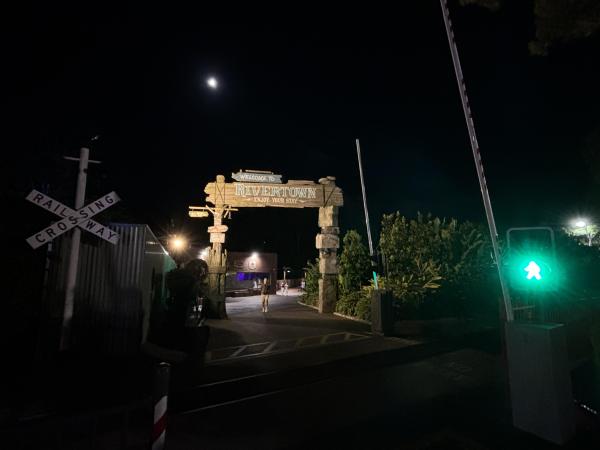
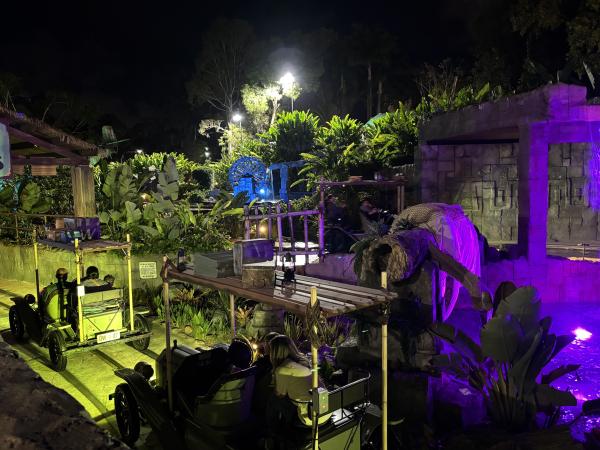
 3 points
 -
3 points3 points3 pointsTo be fair, we really have no Idea what the actual finished product will be. Perhaps Dreamworld will improve the launch so the ride doesn’t loose momentum so quickly, perhaps it will be story-driven with lots of big props and additional theming elements built around the track (like rock work and major set pieces) to add excitement and make it feel faster? I highly doubt the park’s current management would ever settle for a mediocre ride experience and I have faith they can make this work. It’s also worth remembering that Motocoaster was always very popular with the GP. So while enthusiasts may not like it, there’s definitely still an audience for it and completely scrapping it wouldn’t help the “Dreamworld have closed all their classic rides” narrative that the park is trying to get away from.2 pointsThe ride is just not very good though. Comfort is just the worst of the issues. Replace the shit motorbike trains with quad bikes and its a boring coaster that loses all its speed after the first turn and just meanders around. Really there isn't much to work with. I don't have any idea what the layout changes are going to be and I'm sure whatever theming they do will be at a very good standard like the rest of rivertown. But I feel it'll have to take a lot to make the ride decent let alone better than its cousin at sea world (something that was designed well from the outset) Totally agree, motocoaster stuck out like a sore thumb in rivertown and that needed to be addressed (I think we can all agree on that), but i reckon something ground-up would have barely cost more than a reskin of a ride that doesn't have a lot going for it2 points2 pointsI wish DW did this to it. MC2 is unlikely to be much better than MC1, as the track layout will still be terrible.
 2 pointsThe reality is dw is handling their pr much much better and more dynamically than their competitor Instead of long winded plans focus group and lengthly approval processes they seem to see something negative happening down the road and jump on facebook and use it to their advantage They are 100% winning at PR2 points2 pointsOnly compliment I’ll give is that the new projection mapping for the arch on event nights doesn’t look too bad.2 points@Brad2912 if you could please do the honours: https://bit.ly/4ASr2zd
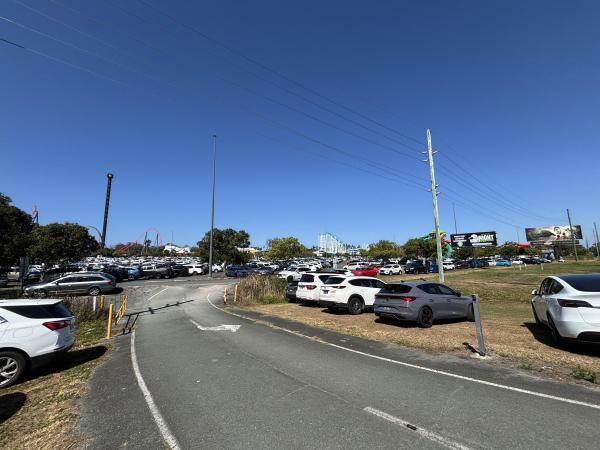
 2 pointsIt seems highly unusual for the lawyers for the complainant to ask for one of the names to be suppressed.2 pointsOr there are other reasons they don't want police poking around2 points2 pointsGreat read. I knew the park was really struggling in the late 2010’s, but never quite realized just how close Dreamworld’s demise actually was. To think if Greg had simply never left VRTP, it’s extremely likely we would’ve lost the park around 2021. Driving past today, the car park was overflowing yet again, with people parking all along the surrounding streets to get in. I think it’s pretty safe to say that Greg has well and truly achieved his goal of pulling off “one of the biggest turnarounds in a theme park business ever”!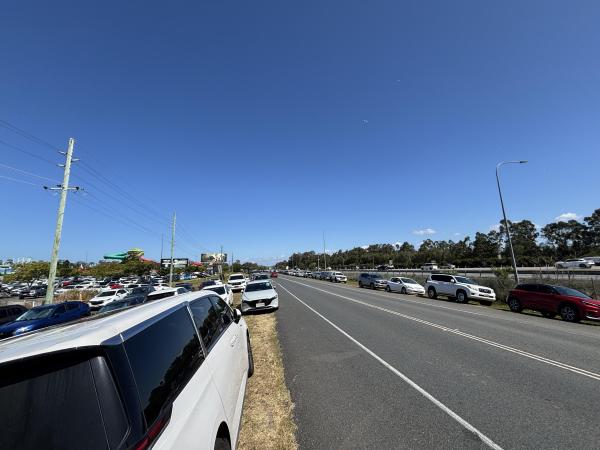
 2 pointsIt feels like this was a last minute decision, but it’s great to see (especially when they’re getting good crowds). And it’s great to see they’ve found a way to keep the night markets going as per normal, but also allowing the hours to be extended and keep the rides open.2 points2 pointsEverything that jayw wrote about was temporary as components are slowly getting repaired or replaced. Hence the eye/gem room being blocked off, and the temp lighting in the queue. Eye/gem room is now back open, and the queue lighting is back. Repairs are still being done by Pico Play tho. :)2 points2 pointsStudio Proof is Mark Watson, he has done a lot of work for the Australian industry.2 pointsCalling this ride not very good is an understatement. It’s awful. You get a launch, a brief moment of excitement, and then it dies. I’ve got no doubt DW will theme the absolute shit out of it and do a fantastic job. But you can put all the theming, theming effects and fancy scenery in the world around it, and it won’t change the fact that the ride layout sucks. $20m to put lipstick on a pig. It might end up being a very pretty pig, but it’s still a pig. 🐷1 pointI'm sure some people will like it, but for me, spending $20m on a mediocre ride when a ride 100 times better already exists in the same area is a waste of money.1 pointI actually think the ride will be a good improvement, MDMC was so much more fun in the side cars then the actual bikes.1 pointi've no idea what part it played in this tragedy - but i'm always comforted by Australian standards requiring a seatbelt. Sure it takes longer to load and dispatch, but that little extra safeguard gives a lot of peace of mind.1 pointA person falling out of a roller coaster in this day and age is unthinkable There are lots of variables at play (photo evidence of the man being a bigger fella, the train returning to the station with its lap bar fully open, Six Flags maintenance budgets getting cut, and by all accounts safety culture amongst that park's staff being not great) so really hope the investigators can get to the bottom of it as soon as possible Thoughts go to the victim, their family, workers, bystanders and those on the ride at the time1 pointYeah, Dreamworld's marketing staff have produced some really cringe promo videos in the past, but being in house, and not needing multiple layers of approval for every step does pay off at a grass roots level for those very reasons.1 pointWhat a confusing way to represent this info. They definitely need to find a different way to do it, like with a calendar! Funfields does it very well https://www.funfields.com.au/open-dates-times/ Which means at this stage, they aren’t extending their hours for Easter, which is a terrible decision.
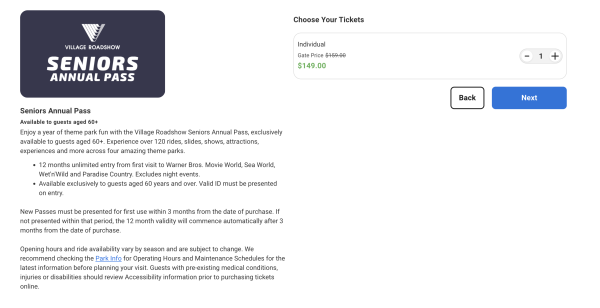
 1 pointExactly what I think about most GCB articles1 pointPositive press/fluff piece for Dreamworld whilst down the road is getting negative press.1 point1 pointI found a couple more tracks from the front entrance music loop. “Under the Lighthouse” by Tim Janis: “The Sunny Vista Motel” by Rupert Gregson-Williams:1 pointDreamworld is open till 9pm this Friday/Saturday and next! That is awesome!1 point1 pointNew annual pass for Seniors has been released, basically the Saver Pass for $40 cheaper with age restrictions.
 1 point1 pointI don't think we need to go about binning an entire ride just because one main spar and maybe a few supports are buckled. This isn't like a rollercoaster where every piece of track is customised - the spars and supports are all standard pieces, and engineers have literally dozens of identical pieces from which to replicate parts from. It appears as though the damage was accidental, and most likely this will be covered by insurance. It'll return, but if it's insurance it will take time to assess and payout the claim as well as identify a suitable company to provide the new parts.1 point1 pointI certainly believe the intention of the closure was maintenance. I don't believe that whatever caused that twisted metal was "routine", and the real reason I decided to post about it is because I also don't think it's something fixable on a 40-year-old Ferris Wheel made by a defunct company. That whole spoke of the wheel would need complete re-fabrication. If there's been some mishap that has damaged the wheel, like what @DaptoFunlandGuy suggested, I doubt LPS would be going public with it - certainly not to 7 News. That broadcast sounds like a PR response to being asked questions about why the wheel has been pulled apart. Ultimately, the way I see it is that it appears unlikely this particular Ferris Wheel is coming back from this. If the issues that the maintenance was addressing were fixable before, they've now got a bent, cracked and twisted frame to deal with as well. And as some have already mentioned, it's an old ride that has been sitting next to saltwater for 4 decades. This seems like new wheel territory. The question is, with Hair Raiser also still seemingly just sitting there awaiting whatever maintenance it needs, is it within the park's budget or capability to buy a new Ferris Wheel right now? Judging by how some of their most popular rides have been sitting idle for months at a time, I'm going to wager the answer is no.1 point1 pointNot sure if it's been mentioned in another thread but since it isn't mentioned here, Mark Petrie has a nice little track people might be familiar with called Where We Are.1 pointSometimes acronyms isn’t the right choice! No idea what any of these are.1 pointThis leaderboard is set to Brisbane/GMT+10:00












Important Information
By using this site, you agree to our Terms of Use. We have placed cookies on your device to help make this website better. You can adjust your cookie settings, otherwise we'll assume you're okay to continue.